
Bookkeeping
2024 Federal Form 1065 Us Return Of Partnership Income

Regulations section 1.263A-1(e)(3) specifies other indirect costs that relate to production or resale activities that must be capitalized https://www.odbv.nl/bookkeeping/professional-bookkeeping-services-houston-tx-2/ and those that may be currently deductible. If a syndicate, pool, joint venture, or similar group files Form 1065, it must attach a copy of the agreement and all amendments to the return, unless a copy has previously been filed. Partner amended return filed as part of modification of the IU during a BBA examination. The 2024 Form 1065 is an information return for calendar year 2024 and fiscal years that begin in 2024 and end in 2025.
Foreign Partnerships
Although the partnership provides an analysis of the partner’s capital account on item L of Schedule K-1, that information is based on the partnership’s books and records and can’t be used to figure the partner’s adjusted basis. Generally, the partnership decides how to figure taxable income from its operations. However, certain elections are made by you separately on your income tax return and not by the partnership. Don’t file Form 7217 if the distribution consisted only of money or marketable securities treated as money. Also, don’t file Form 7217 for payments to you for services other than in your capacity as a partner under section 707(a)(1) or for transfers that are treated as disguised sales under section 707(a)(2)(B). Have you ever received a K-1 tax form and wondered, “What am I supposed to do with this?” Understanding how to report partnership income is a key step in successful tax filing, and it’s often misunderstood.

Maintaining Capital Accounts

So if you’ve got four partners and you forget to file for two months, you’re looking at nearly $2,000 in penalties. That’s a serious cost for missing an informational return, so it’s not something to brush off. Form 1065 is due every year by March 15, or the next business day if March 15 falls on a weekend or holiday. This gives partnerships a couple of months after the end of the calendar year to get their Mental Health Billing financial records in order and complete the form. You can request an automatic six-month extension using Form 7004, which pushes the deadline to September 15. 1) Schedule L – This is a balance sheet that details your business’s assets, liabilities, and equity accounts.
Complete IRS Form 1065 Schedule M-1 (page
Thus, a partnership’s ultimate members will be partners holding a direct interest in the partnership, partners holding an interest in an upper-tier partnership, or shareholders in an upper-tier S corporation. An upper-tier partnership or upper-tier S corporation is a partnership or S corporation that doesn’t itself make the contribution, but instead receives an allocated portion of a qualified conservation contribution from another partnership. If the partnership wasn’t engaged in the trade or business of gambling, (a) report gambling winnings on Schedule 1 (Form 1040), line 8b; and (b) deduct gambling losses to the extent of winnings on Schedule A (Form 1040), line 16. Generally, this cancellation of debt (COD) amount is included in your gross income (Schedule 1 (Form 1040), line 8c). Under section 108(b)(5), you may elect to apply any portion of the COD amount excluded from gross income to the reduction of the basis of depreciable property. See Form 982, Reduction of Tax Attributes Due to Discharge of Indebtedness, for more details.
Where to find Form 1065 and how to file

Enter the total from 1065 aggregate positive amount and the total aggregate negative amount in the appropriate space provided. “Aggregate positive amount from all section 734(b) adjustments” means the increase in the basis of partnership property from all section 734(b) adjustments. Enter the total aggregate negative amount (in the appropriate space provided) resulting from all section 734(b) adjustments.
Because the questions throughout Schedule B are very specific, it can be helpful to work with a certified public accountant or tax professional to ensure all information is provided correctly. There’s no denying that filling out an IRS Form 1065 is a time-consuming and tedious endeavor. Fortunately, there are resources at your disposal to make it easier. It’s a good idea to invest in an accounting software and tax software that can help you organize your information. In addition, you’ll find it worthwhile to hire a tax professional who can guide you through every aspect of this complex process. The first years focus on building your profile and progressing.
- If the partnership has made an election under section 6418 to transfer a portion of a general business credit determined under section 48 to an unrelated transferee, use code ZZ to report to the partners their shares of the retained section 48 credit.
- If you didn’t materially participate in the oil or gas activity, this interest is investment interest expense and should be reported on Form 4952.
- The amount you enter on this line should be reduced by any liabilities assumed by the partner in connection with, or liabilities to which the property is subject immediately before, the distribution.
- You must report this in your own Form 8283, Part I, line 3, column (h).
- While Form 1065 is the standard tax form for partnerships, Form 1041, Income Tax Return for Estates and Trusts, is used to report income and pay taxes on behalf of trusts.
- It’s a summary that reveals each partner’s share of the partnership’s income, credit and deduction.
- Failing to file Form 1065 on time can result in penalties from the IRS.
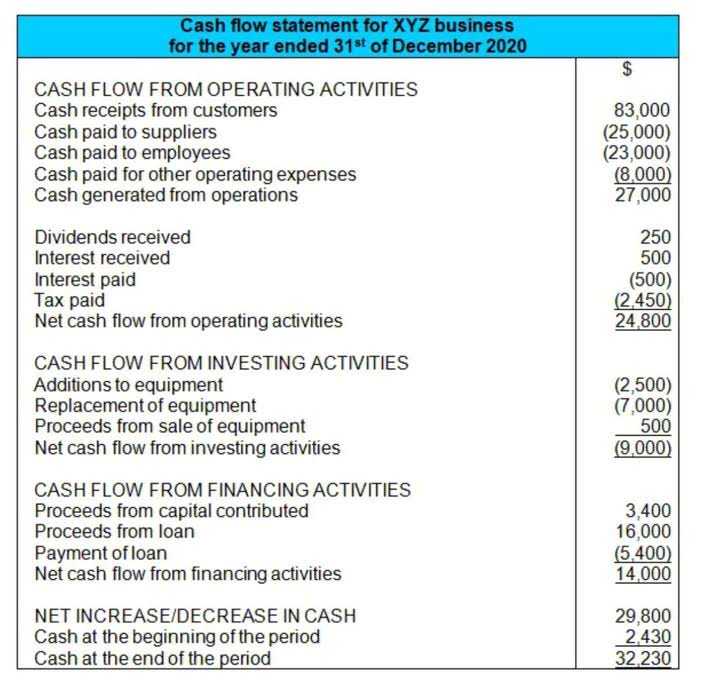
It’s important to have this document when filing Form 1065 to determine your business’s financial position at the end of the year. In recent years, there have been several adjustments made to Schedule B of Form 1065 – a section where partnerships provide additional operational details that don’t fit elsewhere on the form. Filling specific lines such as ‘Rents’ at line number nine requires careful consideration because only rents incurred during the regular course of conducting business activities qualify, whereas personal rental payments do not fall into this category. It requires meticulous preparation and a deep understanding of your business’s financial standing.
- The ending percentage share shown on the Capital line is the portion of the capital you would receive if the partnership was liquidated at the end of its tax year by the distribution of undivided interests in the partnership’s assets and liabilities.
- Generally, where you report this amount on Form 1040 or 1040-SR depends on whether the amount is from an activity that’s a passive activity to you.
- Form 1065 is the partnership’s overall tax return that details its total income and expenses.
- No deduction is allowed under section 212 for expenses allocable to a convention, seminar, or similar meeting.
- Your distributive share of losses attributable to all of the partnership’s trades or businesses may be limited under section 461(l).
- So if you’ve ever asked yourself why you’re filling out a tax return when your business doesn’t pay tax directly, this form is the answer.
- Partnerships can request an extension but still face penalties if denied.
- QBI items and W-2 wages allocable to qualified payments include QBI items included on Statement A that are allocable to the qualified payments reported to the partnership on Form 1099-PATR from the cooperative.
- Partnership gains from the disposition of farm recapture property (see the instructions for Form 4797, Part III, line 27) and other items to which section 1252 applies.
- If the partner doesn’t materially participate in the activity, a trade or business activity conducted through a partnership is generally a passive activity of the partner.
- For more details on the uniform capitalization rules, see Regulations sections 1.263A-1 through -3.
- To transition from just another business owner to a savvy entrepreneur who knows their way around taxes, understanding Form 1065 instructions is key.
The partner will enter the amount in Form 8990, Schedule A, line 43, column (c). 526, and Regulations sections 1.170A-14(j) through (n) for more details and information on the three exceptions. If the partnership made a qualified conservation contribution for the preservation of a historic structure, there are additional requirements that may apply to obtain a charitable contribution deduction. This deduction may be reduced if rehabilitation credits were claimed for the historic structure.
